
Logging into OKX: A Trader’s Straight Talk on Spot Trading and Sign-In Tips
Okay, so check this out—getting into OKX feels simple at first. Really? Well, yes and no. My instinct said “easy,” but then I ran into the little snags that every crypto trader knows: 2FA quirks, email delays, and that momentary panic when the UI shifts. Woah—small things, big stress.
Here’s the thing. I trade regularly and I’ve watched OKX evolve. Initially I thought their sign-in flow was clunky, but then they smoothed a few edges. Actually, wait—let me rephrase that: some edges. On one hand the account setup and identity steps are tighter (which is good), though actually the extra verification sometimes slows down a quick spot trade when the market wiggles. Hmm… something felt off about relying only on email 2FA once. My gut said use an authenticator app, and honestly that’s still my move.
Sign-in basics: username or email, password, then 2FA. Short. Simple. But remember that short bit is the easy layer; the rest is where you can either make your life better, or—if you’re sloppy—create needless friction. Pro tip: set up multiple recovery options before you need them. I learned that the hard way when an old SIM swap made me very very annoyed. (oh, and by the way… keep a backup code somewhere offline.)
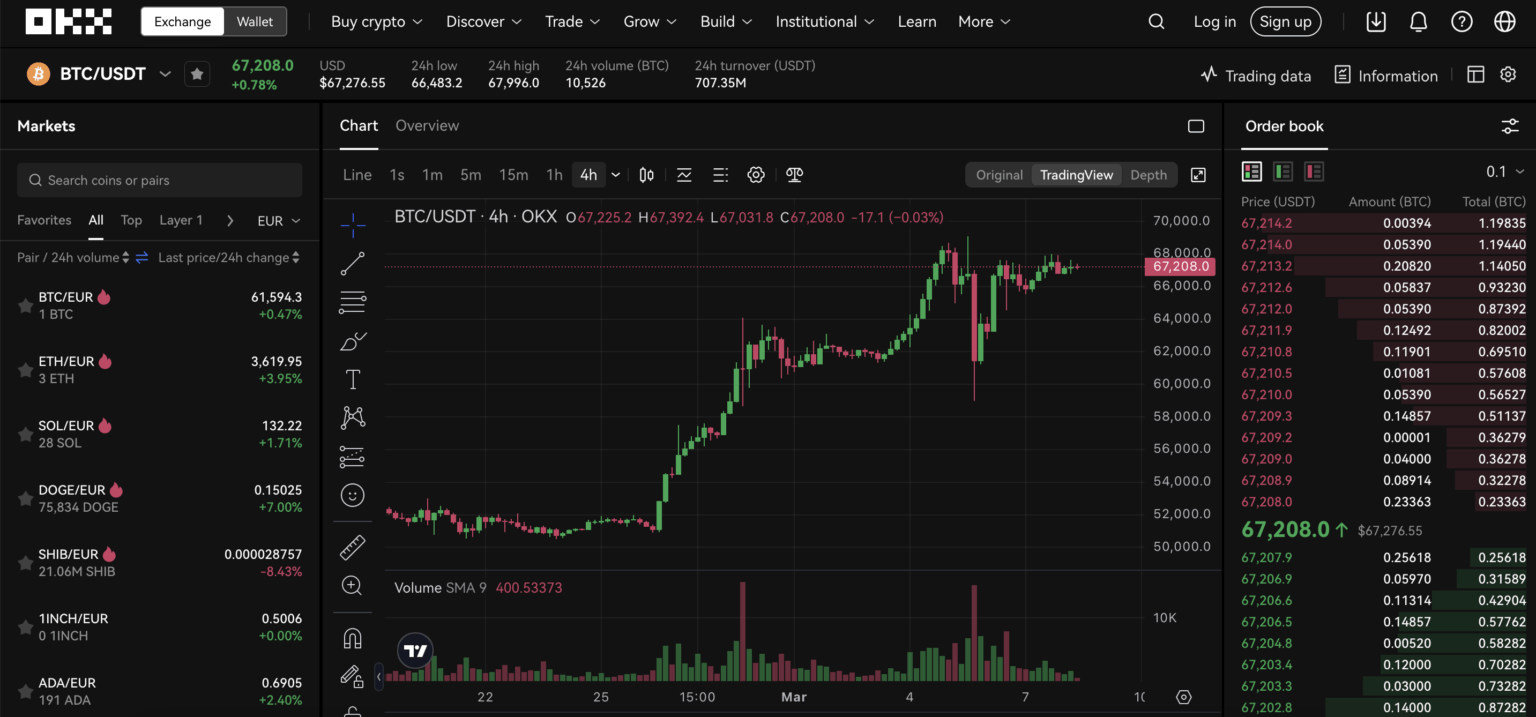
OKX login essentials and spot trading workflow
Log in, navigate to Spot, pick your pair, and execute. That’s the elevator pitch. But the real story is in the tiny decisions that determine slippage, order types, and how fast you can react when BTC jumps 3% in five minutes. Something I tell newbies: market orders are fine for quick entries, but limit orders save you fees and surprises—most of the time. Seriously? Yes. And no—again it depends on volatility.
When you click into spot trading, the interface shows charts, order book, and your balances. At a glance, you can be ready to trade. My advice: customize the chart layout, save a template, and keep the order panel where you actually look. Little UX habits reduce mistakes. On one hand that sounds obsessive; on the other, losing a trade because you hit market instead of limit is a real punch in the gut. I’m biased, but I always double-check the order type—every single time.
Security note: enable Google Authenticator (or an equivalent app) and, if available, API whitelisting for automated strategies. The exchange supports hardware keys for login—use them if you can. Initially I ignored hardware keys because they seemed overkill, but later when an account email got phished (ugh) I was grateful for the extra layer. Not 100% foolproof, of course, but it reduces attack vectors.
Practical troubleshooting: what to do when sign-in fails
First reaction: frustration. Really. Second reaction: breathe. Then follow a checklist. Check caps lock. Check your network (sometimes corporate VPNs block certain ports). If 2FA won’t accept codes, verify your phone time sync—it’s a tiny thing that trips people up. On one hand these are trivial; on the other, they feel catastrophic in the heat of a fast market move.
If you can’t sign in at all, start the recovery flow. It’ll ask for identity verification if you recently changed devices or cleared cookies. That can take hours. Plan around it. I once had a weekend-long hold on withdrawals because of re-verification—annoying, yes, but also a reminder that exchanges must balance convenience with safety.
And look—if you need a quick refresher or want to bookmark the official sign-in flow, use this resource for a straightforward path to the page: okx login. It helped a friend of mine get back in when his browser autofill decided to act up.
Spot trading tactics that tie to your sign-in setup
Log-in readiness affects trade readiness. If you habitually log out between sessions (good for security), that means you should expect a two- or three-step sign-in—plan for it. If you stay logged in on a dedicated device, you trade faster but expose yourself to different risks. On one hand I like speed; on the other I’m cautious—so I split roles across devices: mobile for alerts, desktop for serious entries. That arrangement fits my rhythm. Your mileage may vary.
Order types matter: limit, market, stop-limit, OCO—know how each behaves. For quick scalp trades, I use limit+post-only to avoid taker fees when liquidity is thin. For larger entries I slice orders and watch the order book. These are tradecraft choices, not platform endorsements. I’ve had setups where a poor choice at sign-in (wrong account, old sub-account) led to confusion in a fast market. So: label accounts clearly and keep your UI tidy.
FAQ
How do I recover access if I lost my 2FA device?
Start with the recovery option on the sign-in page and follow the exchange’s identity verification. It can take time—sometimes up to a few days—so prepare backups ahead of time: recovery codes, secondary authenticator, or hardware key. I’m not 100% sure about every case, but in my experience being proactive shortens the wait.
Is OKX safe for spot trading?
Generally yes—OKX follows standard security practices and offers features like 2FA, withdrawal whitelist, and hardware keys. That said, no exchange is a perfect vault. For large holdings consider cold storage. For active trading, use only the capital you need on-exchange. Here’s what bugs me: traders often mix long-term capital and day-trade funds in one account. Split them.
Why did my sign-in require extra verification suddenly?
Usually because of a new device, IP/geolocation change, or suspicious activity. It’s annoying but meant to protect you. If you travel often, pre-notify support or use saved VPN ranges thoughtfully. Also—clear your cache before major changes; some session cookies throw odd errors.
Alright—closing thought: logging into OKX and trading spot are straightforward when you treat login as part of your trading system, not an afterthought. I’m biased toward preparation. That might sound obsessive, but in crypto, a little prep saves a lot of late-night panic. So set up robust 2FA, save recovery codes, and keep a clean interface. You’ll trade smoother and sleep better—mostly. Hmm… maybe not perfect sleep, but better.